

Your child got into the University of Toronto, Toronto Metropolitan University, York or OCAD U, and now you face the next big decision: should you rent them an apartment, or buy a condo they can live in while they study? Parents ask us this every year. In 2026 the answer looks different than it did even two years ago, because rents near campus have eased, condo prices have come down, and the rules on mortgages and taxes have changed. This guide walks through the real numbers, the tax and title questions that matter most, and how to decide what's right for your family.
Updated November 2026. Figures change often, so we've noted the source and date for each one.
The short answer: rent or buy?
There's no one-size-fits-all answer, but here is a useful starting point.
Renting usually makes more sense if:
- Your child is likely to be in Toronto for three years or less, or may switch programs, transfer or study abroad.
- Carrying a second property would stretch your budget if interest rates rise or your income changes.
- You don't want to manage repairs, condo board issues or tenants from a distance.
Buying is worth a serious look if:
- Your child plans to stay in Toronto for four years or more, including graduate school or a first job after graduation.
- A younger sibling may use the same home later.
- You can comfortably carry the costs and see the home as a long-term family asset, not a short-term bet on prices.
The holding period matters most. Buying and selling a home carries one-time costs, including land transfer tax, legal fees and real estate commission, and it usually takes several years of ownership to make those costs worthwhile.
What renting near campus costs in 2026
The rental market has softened. According to liv.rent's October 2026 report, the average unfurnished one-bedroom in the City of Toronto rented for $1,969 a month, down 3.7% from a year earlier. Rentals.ca's numbers, which use a different method, put the one-bedroom average at $2,183 in early 2026. Expect to pay more in the downtown core, closer to campus.
A big reason for the change is the federal cap on international study permits. Ottawa set the 2026 cap at 408,000 permits, and rents near many Ontario campuses have fallen as international enrolment has dropped. Downtown Toronto is an exception to watch: Rentals.ca found that rents near the University of Toronto have held up better than the citywide average, because so many non-students also want to live in the core.
A tip for renters: before signing a lease you hope to keep for four years, ask when the unit was first occupied. In Ontario, units first occupied for residential purposes after November 15, 2018 are exempt from rent control, so the landlord can raise the rent by any amount with proper notice. Older units are capped by the provincial guideline, which is 2.1% for 2026.
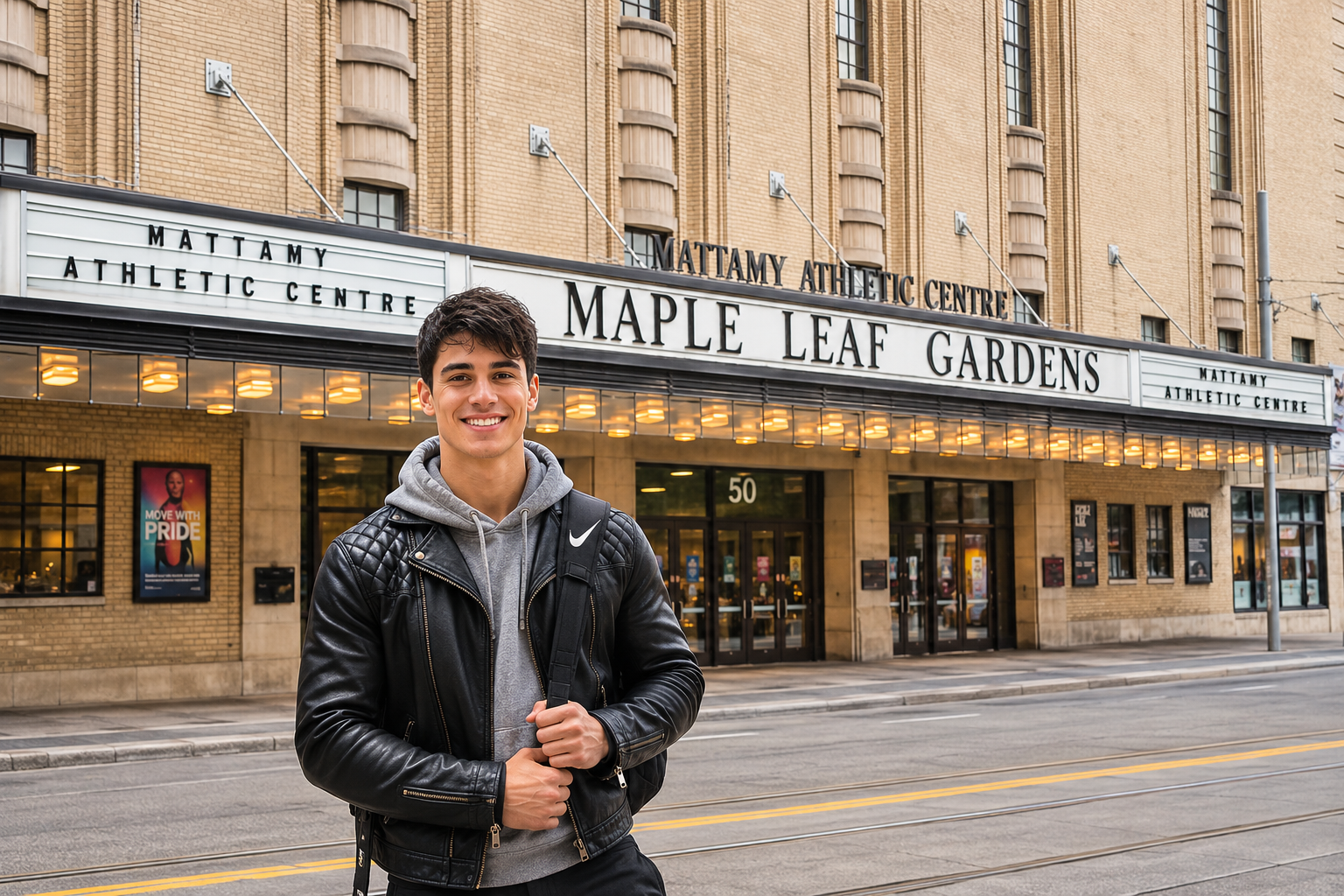
The Mattamy Athletic Centre, the former Maple Leaf Gardens, is part of Toronto Metropolitan University's downtown campus.
What buying costs in 2026
For buyers, this is one of the most favourable condo markets Toronto has seen in years. TRREB reported an average condo apartment price of $659,214 in the City of Toronto in October 2026, and TRREB's benchmark price for GTA condo apartments was down about 7% from a year earlier. More listings mean more choice and more room to negotiate.
Borrowing costs have moved the other way. The Bank of Canada raised its policy rate to 2.50% on October 28, 2026, its first increase in more than three years. In early November, the best insured five-year fixed rates were in the mid-4% range, according to Ratehub.
A sample comparison
Here is a simple illustration, not a quote:
- Purchase price: $650,000 condo
- Down payment: 20% ($130,000)
- Mortgage: $520,000 at 4.75%, 25-year amortization, which works out to about $2,950 a month
- Plus: condo fees, property tax and insurance
Compare that with roughly $2,000 to $2,200 a month to rent a one-bedroom. Owning costs more each month, but part of every payment builds equity. A two-bedroom shared with a roommate can narrow the gap, though rent you collect is taxable income and makes part of the home a rental property.
Don't forget closing costs. In Toronto, buyers pay both Ontario and Toronto land transfer tax, plus legal fees, title insurance and adjustments. Use our Buy page calculators to estimate them for a specific price.
Whose name should go on title?
This is the question that matters most, and the one most parents don't think about until they're in a lawyer's office. Who owns the condo affects your taxes, your mortgage options and your first-time buyer benefits.
Option 1: Parents own it
- Capital gains tax: each family unit can designate only one property as its principal residence for each year. For tax purposes, a family unit is you, your spouse and your children under 18. If the condo isn't designated, any gain when you sell is a taxable capital gain. Half of the gain is added to your income and taxed at your marginal rate. (The proposed increase to a two-thirds inclusion rate was cancelled in March 2025.)
- Mortgage: lenders treat a condo you won't live in as a second property, and a rental property typically needs a larger down payment, usually at least 20%.
- Land transfer tax: if you already own a home, you won't qualify for the first-time buyer refunds.
Option 2: Your child owns it
- Tax-free gains: once your child is 18, they form their own family unit and can designate the condo as their own principal residence. If they live there, the gain on a future sale may be tax-free.
- First-time buyer benefits: your child may qualify for land transfer tax refunds of up to $4,000 from Ontario and $4,475 from the City of Toronto. They may also qualify for a 30-year amortization on an insured mortgage, available to first-time buyers since December 15, 2024.
- FHSA: at 18, a Canadian resident can open a First Home Savings Account and contribute up to $8,000 a year, to a lifetime limit of $40,000. Parents can gift the money to contribute, and qualifying withdrawals for a first home are tax-free.
- The trade-offs: most students don't have the income to qualify for a mortgage alone, so a parent usually needs to co-sign or guarantee the loan. A gifted down payment legally becomes your child's asset. Your child also uses up their first-time buyer status now rather than later.
Option 3: You co-own it
Many families split ownership. The rules follow each owner's share. For example, if a parent who has owned a home before buys 50/50 with a first-time-buyer child, the child can claim 50% of the land transfer tax refund. The principal residence exemption would also apply only to the child's share.
Before you sign, speak with an accountant and a real estate lawyer. The right structure depends on your family's finances, and it's much easier to set up correctly at the start than to fix later.
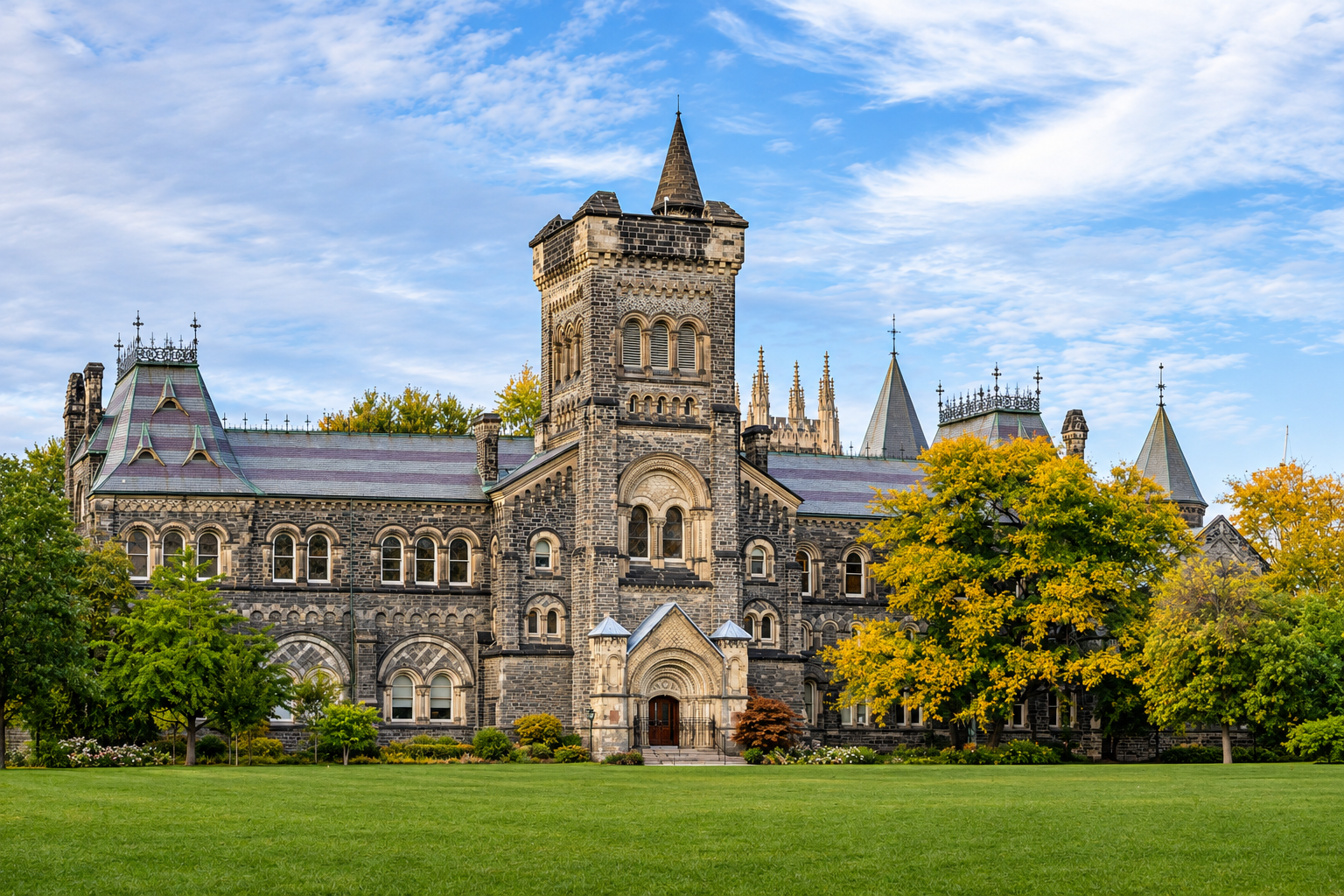
The University of Toronto's St. George campus.
Don't forget Toronto's Vacant Home Tax
Every residential property owner in Toronto must file an annual Vacant Home Tax declaration, even if the home is occupied. The tax is 3% of the property's assessed value and applies if a home sits empty for six months or more in a year. A condo that is your child's principal residence for at least six months of the year counts as occupied, but you still have to file. For the 2026 tax year, declarations are due by April 30, 2027. If your child goes home for the summer, the condo still qualifies as long as it remains their principal residence.
Where to buy or rent near campus
Being close to campus matters more for a student than almost anything else. The best locations are also the ones that will be easiest to rent or resell later, because they appeal to young professionals too.
- University of Toronto (St. George): the Annex, Harbord Village, Kensington-Chinatown and the condo towers of the Bay Street Corridor are all within walking distance. St. George, Spadina, Queen's Park and Museum subway stations are close by.
- Toronto Metropolitan University: the Church-Yonge Corridor, the Garden District and Cabbagetown put students within a short walk of campus and the Yonge line.
- OCAD University: condos around Grange Park, Queen West and the Entertainment District.
- York University (Keele campus): the Line 1 subway extension makes condos near Pioneer Village and Vaughan Metropolitan Centre stations a practical option.

Toronto Metropolitan University's campus sits in the heart of downtown.
What to look for in a student condo
- A layout that rents well later: a one-bedroom plus den or a two-bedroom offers more flexibility than a small studio, for a roommate now or a tenant after graduation.
- The status certificate: review the reserve fund, upcoming special assessments and any rules on leasing or short-term rentals.
- Condo fees: what they include (heat, hydro, water) makes a big difference to your monthly cost.
- Security and building management: a concierge and a well-run building matter more when your child is living on their own for the first time.
Questions to ask before you decide
- How long will your child realistically live in Toronto? Will they spend first year in residence?
- Could a younger sibling use the same home later?
- Can you comfortably carry the costs if interest rates rise further?
- Who will deal with repairs, the condo board and any roommates?
- What's the exit plan after graduation: sell, rent it out or let your child stay? Turning a home into a rental can trigger tax consequences, so plan ahead.
Owning a property can also teach real responsibility. It's worth talking openly with your child about expectations before you commit.
Frequently asked questions
Is it better to buy or rent for a university student in Toronto?
If your child will be in Toronto for four years or more and you can carry the costs, buying can make sense, especially in today's buyer's market. For shorter stays, or if flexibility matters more, renting is usually the better choice.
Can my child's condo be our family's principal residence?
A home lived in by your child can qualify, but each family unit can designate only one principal residence per year. If you designate the condo, your own home loses the designation for those years. If your child is 18 or older and owns the condo, they can designate it as their own principal residence.
Do parents pay capital gains tax when they sell their child's condo?
Usually yes, if the condo isn't designated as the family's principal residence. Half of the gain is taxable at your marginal rate. Speak with an accountant before you buy, not when you sell.
Can my child get the first-time buyer land transfer tax refund if we buy together?
Yes, but only for their share. If a parent who has owned a home before co-owns 50/50 with a first-time buyer, the child can claim 50% of the refund.
Do we have to pay Toronto's Vacant Home Tax on our child's condo?
Not if it's your child's principal residence for at least six months of the year, but you must file the annual declaration either way.
Let's talk about your family's plan
Every family's situation is different. We help parents compare renting and buying near Toronto's universities, find the right building, and connect you with trusted lawyers, accountants and mortgage professionals so the structure is right from day one. Book a discovery call and we'll walk through your options.
This article is general information, not legal, tax or financial advice. Speak with a qualified professional about your situation.
Sources
- TRREB Market Watch, October 2026
- liv.rent, October 2026 Ontario rent report
- blogTO, Rentals.ca February 2026 rent report coverage
- Rentals.ca, rental prices near post-secondary schools (October 2025)
- Zoocasa, Ontario student rental markets and the 2026 study permit cap
- Ratehub, current mortgage rates and the October 28, 2026 Bank of Canada decision
- Department of Finance Canada, 30-year amortizations and the $1.5 million insured mortgage cap
- CRA Income Tax Folio S1-F3-C2, Principal Residence
- Ontario, Land transfer tax refunds for first-time homebuyers
- City of Toronto, 2026 Vacant Home Tax declaration period
Ready to start your search?
Book a free, no-obligation consultation. We'll talk through your goals and map out a strategy.
Book a free consultation